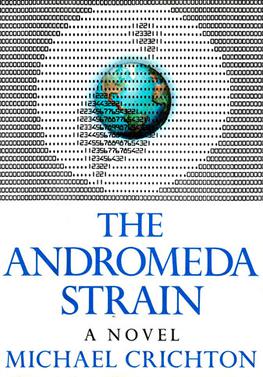
 The Andromeda Strain was my gateway to technothrillers. I’m not sure how I heard of it or whether I just found it browsing the books at the library, but it left such an impression on me that I have a vivid memories of reading it during the summer between sixth and seventh grade, including turning the pages of the worn paperback poolside at the local community pool we spent time at every summer. I was fascinated by the science that was not only the foundation of the book, but that integrated tightly into the plot and the characters. I also have noted how it has served as the template for many technothriller stories since, with its group of scientists called together to apply brainpower to avert an imminent disaster, a government cover-up, its warning that tampering with nature is perilous, and the lesson that the human race isn’t as invulnerable as it believes.
The Andromeda Strain is also the book that kicked off Michael Crichton’s career, making his name synonymous with technothriller and introducing the world to the genre. The book was written in 1969, making it over forty years old, but like The Cuckoo’s Egg, it also holds up well. The world then wasn’t as computer-centric or connected, so there was no tweeting, posting toFacebook or uploading videos on YouTube to let the world watch the catastrophe that befalls the small town hit by the Andromeda virus at the opening of the book. Nevertheless, the science in the book still comes across as authentic and it’s not hard to imagine the story in today’s world (and there have been many books and movies since based on the same premise). The Andromeda Strain was also made into a movie, but it’s been so long since I saw it that I can’t recommend it.
You should definitely put this book on your to-read list if you haven’t (and even if you have, it’s fun to revisit) because it’s a great read and arguably the founding book of the modern age of the genre.
.jpg "The Cuckoo's Egg")